Schools have set us up for failure
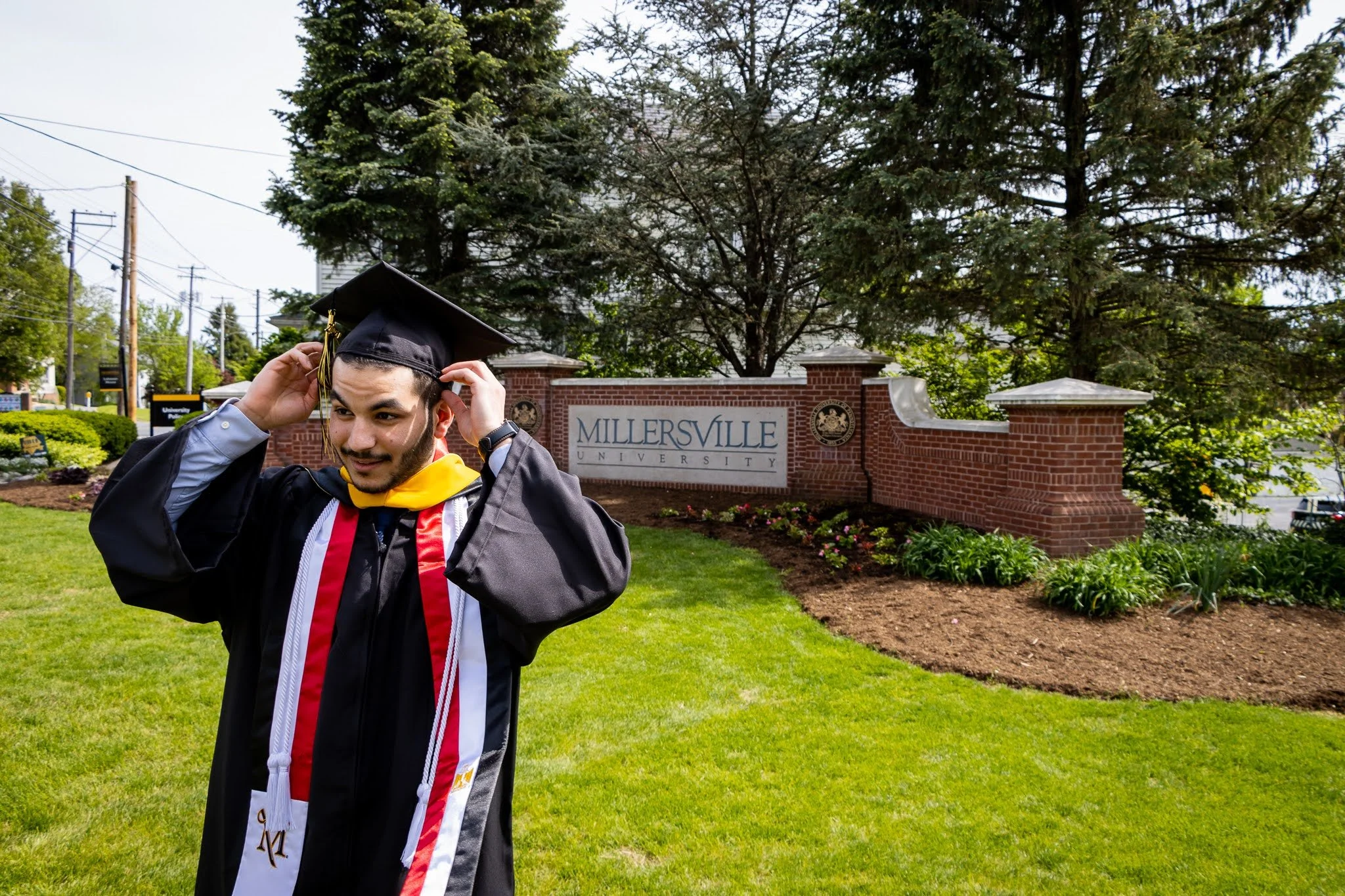
The day I unfortunately entered adulthood.
Schools have one function: take in children, stuff their brains with knowledge they may or may not need, and turn them into adults who will drive our economy forward. Pretty straightforward
With that framing, one would be forgiven for assuming that school mirrors the real world. If you’re reading this, chances are you already know that’s a fairytale.
Chasing the grade
From pre-K to grad school, I was conditioned to do one thing only: get an A even if it costs me my sanity*.
The A was my north star and the only evidence I had to prove I’m not worthless. Before every project, paper, and exam, I prepared as if I were going to war. Bloodied and battered, I fought my way through each hurdle the teacher threw at me to get the coveted A. Anything less, and I may as well commit seppuku since I’ve failed my parents and the entire Abousaif lineage.
So, I got good at school. Like, really good. I barely broke a sweat through elementary, middle, and high school and cruised through the first two years of college. The second I finally started getting confident in my skills, the second two years came knocking.
That was the first time I saw a C on my transcript**, and my heart forgot how to beat. It almost felt like a day trader losing his entire fortune in the financial crisis. Almost.
It completely shattered the identity I had built up to that point of being the invincible straight-A student. I didn’t know how I could ever come back from this humiliation. The world was ending, and I wanted the ground to split open and swallow me whole.
Fast forward a few years, and I graduated from grad school and was ready to finally go out into the world to put everything I learned into practice. It’s time for the A’s I accumulated over 20 years to shine and show the world what I was made of.
Identity crisis numero dos
Once I finally landed a big-boy job, I was ready to go in guns a-blazing. My marketing education taught me all about consumer behavior, target audiences, and crafting a shiny strategy to get them all through the funnel. I already got an A in each of these classes. That’s all the evidence I needed to hit the ground running.
Needless to say, reality’s got hands.
School is predicated on a neat structure. Classes, assignments, projects, exams, and then a grade. That feedback loop trains you to optimize your behavior and learning for the grade, not the knowledge you end up forgetting a couple of months later.
What you quickly learn working full-time is that your “grade” is hitting your KPIs. If you hit them, you’re in the clear. If you don’t, start polishing your resume.
When your livelihood is on the line, the arithmetic changes. You gain a deep understanding of your work and how to do it. You start experimenting and figuring out how to dig yourself out of a hole to reach your success metrics. If you fail, you try a different strategy. Once you succeed, you reinforce those connections in your brain that solidify that knowledge.
Wait…isn’t that what school is supposed to do?
In theory, school is designed to teach you—in a low-risk environment—what professionals have learned through practice. If you complete that course and get an A, congratulations, you mastered the concept. Yet, life is seldom so cut-and-dry. A linear path to success not only doesn’t exist, it’s not even in fiction***. The real path looks a lot more treacherous.
And that, ladies and gentlemen, is what school never prepares you for. It doesn’t get you ready for the endless bouts of impostor syndrome you feel when working with people much smarter than you. It doesn’t show you the anxiety, self-doubt, and pressure of real-world consequences. It doesn’t show you that success can be a muddy metric, and you might have absolutely no idea how to achieve it. School doesn’t account for the hills and valleys you’ll encounter as you figure out how to do your job better. It just needs you to get that A.
The Super Mario Effect
Video games were my favorite pastime growing up. From avoiding obstacles in Crash Bandicoot to treasure-hunting in Uncharted, I was enamored by the challenges. Every time I died in a boss fight, I’d try again with a different strategy, learning from their attack patterns the last time. Whether it took me 10 or 100 tries, I eventually emerged victorious, and it tasted oh-so-sweet.
In retrospect, I was never afraid to try. After all, it’s only a game with no real consequences. I completed it for the sheer fun of beating the story. I never shamed myself when I lost—I simply tried again. And that’s a phenomenon that my favorite science creator, Mark Rober, dubbed the Super Mario Effect.
Mark and his team ran an experiment in which people played a game with the objective of using coding logic to get a car out of a maze. The players were split into two groups: one was told to try again if they failed, and the other was told they lost five points out of 200 when they failed. Keep in mind that these are five made-up, entirely fake internet points worth less than a four-dollar bill.
You can probably guess where this is going, but the results were no less fascinating. Those who were only told to try again were almost 31% more likely to complete the puzzle and—this is the crucial part—made two and a half times more attempts than their internet points-having counterparts. What any successful entrepreneur will tell you is that life doesn’t reward knowledge; it rewards attempts. Those who learn from each failure and try again will eventually strike gold. Mark’s research proves exactly that.
Another example I loved is that Steven Bartlett, entrepreneur and host of the notoriously famous Diary of a CEO podcast, has a team in his company called the Failure Team. That team has exactly one task at the company: experiment endlessly and increase the number of failures as much as they can. They get rewarded based on the number of attempts they make, not the successes they achieve. If that’s not the Super Mario Effect in action, I don’t know what is.
When I first started creating content, I foolishly followed the school approach. Over-research everything, plan carefully, and don’t publish until it’s perfect. That approach has been disastrous in a craft predicated upon experimentation and failure. I was overcome with anxiety and fear every time I wanted to share something, because I wanted to get an A on it. What you quickly realize is that the only grade that exists in here is the improvement you see from one piece of content to the next. If you sharpen your skills and use your previous project to inform your next one, then you already won. The evolution of your work is the Super Mario Effect. And those failures are the only path to success in the real world.
Which brings us back to school, but I think it’s important to inject some nuance in this situation. I’m not arguing that all levels of education must follow the video game model. I wouldn’t want a first-year surgery student who never touched a scalpel to slice someone open. Some stakes are too high, and people must be trained relentlessly in controlled environments.
What I am saying is that failure—especially in school—must be normalized and encouraged to raise a generation willing to take risks that will propel society forward. Setting students’ sights on the A will make them avoid anything that leads anywhere but that grade. As such, we end up with people like me who can’t quickly adapt to the real world. Encouraging failure means empowering students to try things on their own; to figure out what works and what doesn’t, with the teacher serving as a guide that nudges them toward the right answer. Only then does true learning actually occur. Not in the safety of assignments. Not in the anxieties of exams. But in the vastness of experimentation and failure.
That’s where the real world exists, and where we must be comfortable living to create a fruitful and meaningful life.
*And this is what happens when you combine an Arab mindset with an immigrant one.
**To all my fellow computer science kids, I share your pain.
*** I.e., the entire point of fiction is to show the many challenges a character overcomes to reach their goal.